Spa Colmegna: the 1895 bathhouse hidden in Buenos Aires
A shared circuit of sauna, steam and a marble cold pool in a 130-year-old bathhouse in central Buenos Aires. How the circuit works and what to confirm before you go.
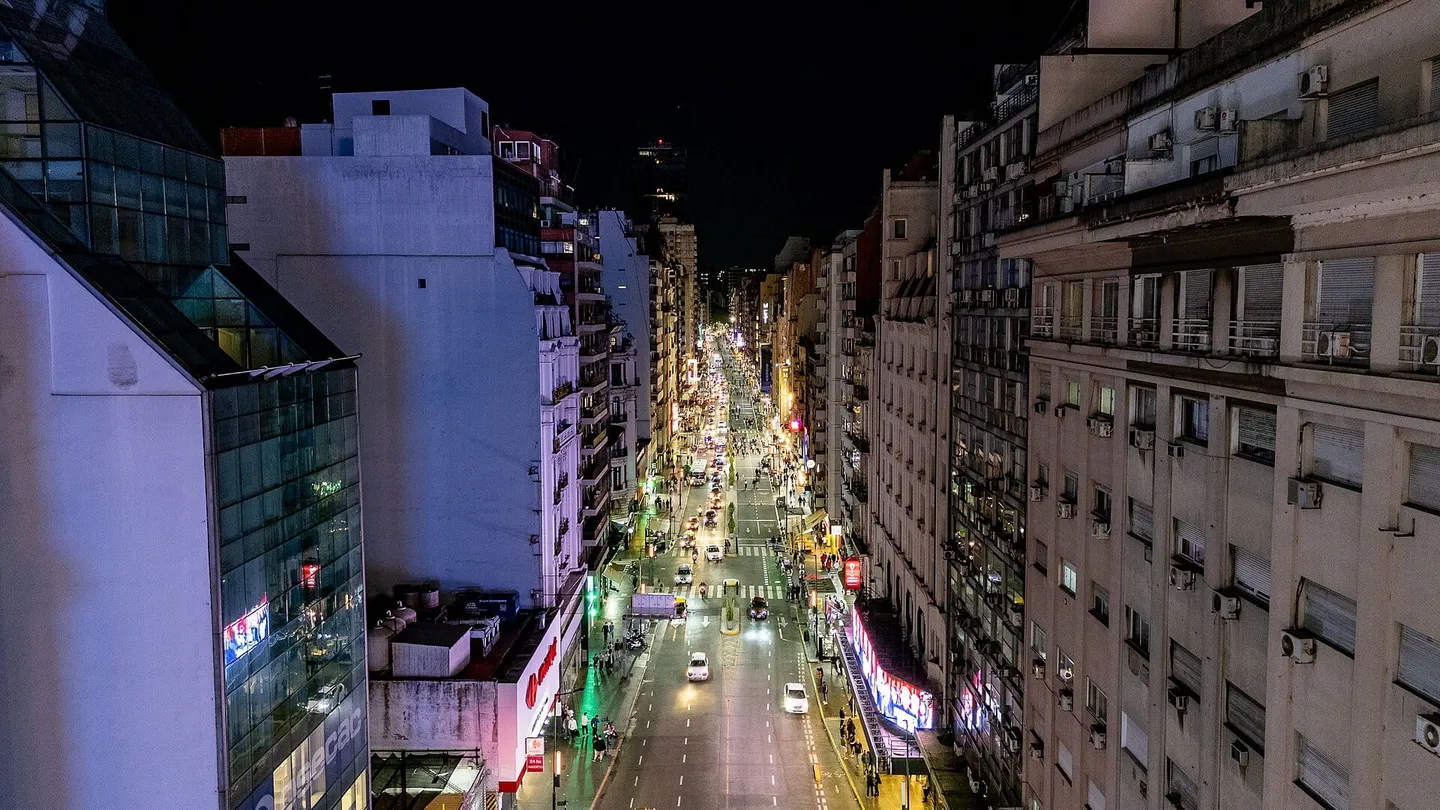

Behind a façade on Sarmiento street, a few blocks from the Obelisco, Spa Colmegna still holds its heat rooms, stained glass, bronze fittings and a marble-lined cold pool. The place opened at the end of the nineteenth century and still takes bathers in the center of Buenos Aires.
It tends to show up in the press as a European palace, a Roman bath, or the first spa in Latin America. This article describes what the Colmegna offers today, what is documented about the history of the address, and what to confirm before a visit.
What Spa Colmegna is
The Colmegna is a historic bathhouse, and the shared circuit is its center: a dry sauna, a Turkish bath, a steam room, a cold pool, a warm pool and rest. Massage, facials, barbering and other spa services can be booked separately and sit outside what this article describes.
The circuit of heat, cold and company follows bathhouse logic, while the individual treatments and the beauty services belong to the spa. The current name uses the second word, but bathing is what appears in the oldest records of the address.
According to the house’s own account, the Italian Luis Colmegna founded the establishment in 1895. There is at least one verifiable historical record: the 1905 Guía Nacional listed, at Sarmiento 839, the “Instituto Médico de Hidro-Electro-Terapia y Casa de Baños” of Luis Colmegna. It was one of ten paid private bathhouses recorded in that edition.
That detail puts the address in the right context. In the early twentieth century, Buenos Aires had private bathhouses downtown and municipal public baths in other neighborhoods, and the Colmegna was part of that urban infrastructure of hygiene, hydrotherapy and sociability, of which very little remains.
How the circuit works
A visit described by La Nación in 2025 followed a sequence of rising temperatures: an acclimatizing room, a milder dry sauna, a hotter sauna, the Turkish bath and steam. Then came the marble cold pool, fed by water from an underground aquifer, followed by rest or another round.
It is a recognizable contrast circuit, with two differences from contemporary studios. The first is duration: there are cabins, tables and places to talk between stages, and the sauna-and-cold sequence does not have to be quick. The second is the material environment, with marble, wood, stained glass and ironwork that belong to the original building, which was made for bathing.
The cold pool is in the Salón Esmeralda, and recent reporting puts the water between 8 °C and 10 °C (46–50 °F). If you are not used to that temperature, start with a short dip, get out if you feel dizzy or unwell, and talk to a health professional before the visit if you have a cardiovascular condition or any other restriction on heat and cold.
Roman, Turkish or porteño?
Calling the Colmegna a “Roman Turkish bath” bundles together different traditions. Roman thermae organized bathing, exercise, rest and public life into large complexes. The hammam, often called a Turkish bath, developed another repertoire of steam, washing and body care. The Colmegna combines European references and rooms with assorted names, without reproducing the model of any of those traditions.
The expression has a history of its own, however. Mikkel Aaland recounts in Sweat (1978) that the European “Turkish bath” appeared in the 1850s, when David Urquhart promoted the hammam in Britain and the physician Richard Barter built a hot, dry-air version in Ireland in 1856. That version circulated under the names Turkish-Roman bath and Roman-Irish bath, and by 1862 it had reached Germany, England, the United States and Australia. The Colmegna was founded in 1895, when those names were already in use.
The house works as a meeting place for people who spend time in the area: the shared circuit adapted to life in the microcentro, with cabins and tables designed for lingering between stages.
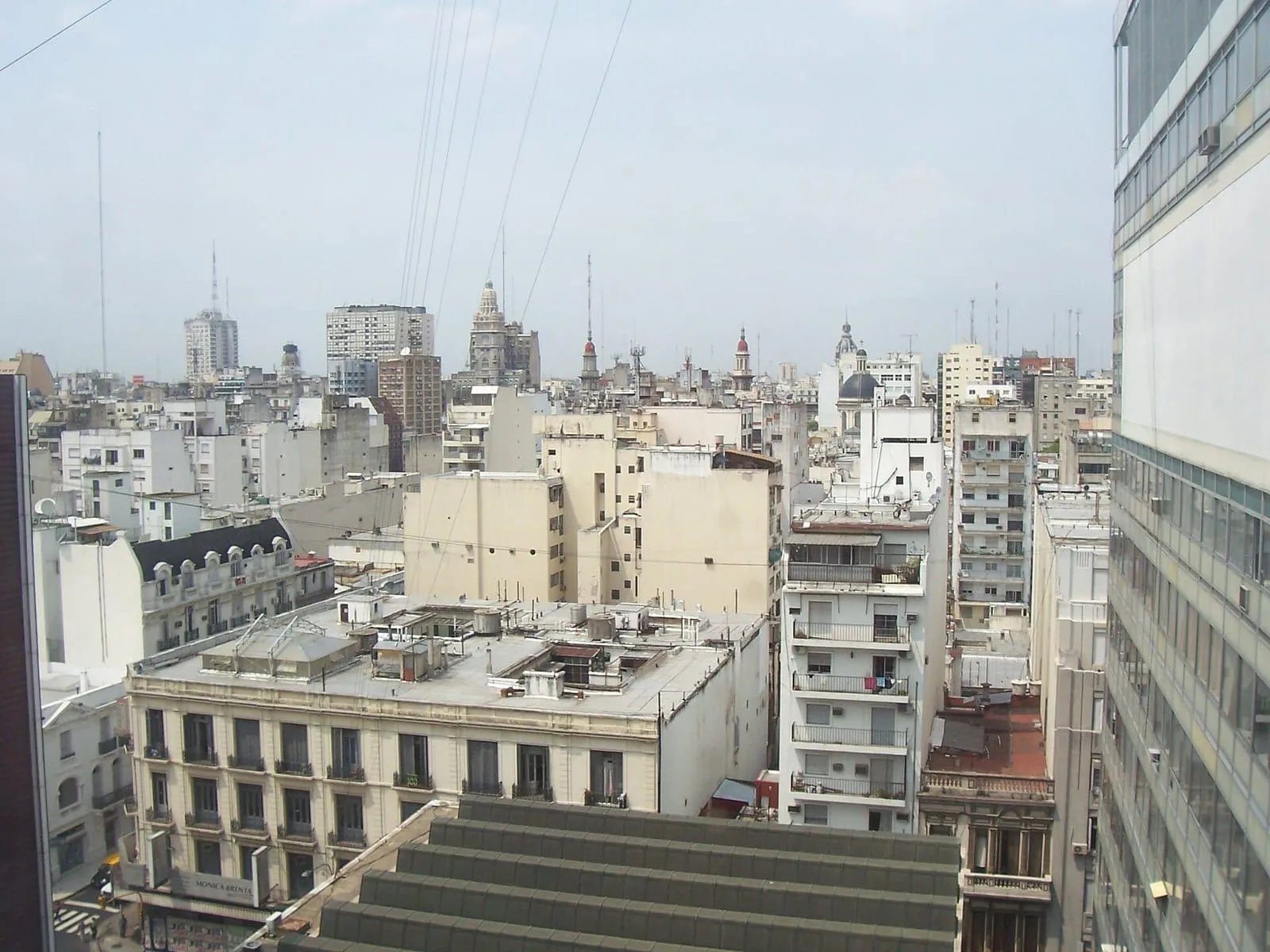
Downtown seen from the Teatro San Martín, a few blocks from the Colmegna: the circuit adapted to the life of this district. Photograph: Loco085, CC BY-SA 2.5, via Wikimedia Commons.

The documented history and the stories told
The Colmegna’s fame also lives on anecdote. Carlos Gardel supposedly always used the same cabin and composed “Mi Buenos Aires querido” there. Jorge Luis Borges supposedly referred to “the Turkish baths on Sarmiento and Esmeralda” in The Aleph. The original design is often attributed to Francesco Tamburini, the architect tied to the Casa Rosada and the Teatro Colón.
None of these stories has published documentation. Even recent sources present Tamburini’s authorship as a belief. The Gardel visit has no record beyond oral tradition. In the case of Borges, the text of The Aleph mentions a Turkish bath establishment near the Brighton seaside resort, not the address at Sarmiento and Esmeralda. The association with the Colmegna comes from oral accounts, as a piece in Revista Anfibia shows.
The 2019 closure and the reopening
In November 2019 the building was evacuated after damage to walls, floors and parts of the finishes, and the spa stayed closed.
The Colmegna reopened to the public after restoration work. The building has therefore been through a recent renovation and remains in use.
What to know before you go
| Detail | Notes |
|---|---|
| Address | Sarmiento 839, central Buenos Aires |
| Circuit | Dry sauna, Turkish bath, steam, cold and warm pools, rest |
| Hours published in July 2026 | Tuesday to Friday, 2pm to 9pm; Saturday, noon to 8pm |
| Sunday and Monday | Closed |
| Access | The space has historically been men-only; recent reporting mentions special mixed dates |
| Booking and price | Confirm directly with the house before your visit |
Hours, prices, available services and access rules can change. Check Spa Colmegna on Instagram before you plan around it. The Baires Secreta piece, published in July 2026, is the most recent source for the hours above.
The visit combines a shared heat-and-cold circuit with a late-nineteenth-century bathing building that remains in use.
Next step: read Bathhouse, spa, recovery and hot springs: what social bathing is and what sits outside it to compare the Colmegna with other formats, or open the Bathhouse map to look for bathhouses in other cities.