Bathhouse folklore: the spirits of the banya, the sauna and the hammam and the rules they left behind
The bannik of the Russian banya, the saunatonttu of the Finnish sauna, the jinn of the hammam, the Japanese akaname, the grandmother of the temazcal and the curses of Bath: what each tradition believed and what remains of it in bathhouse etiquette today.
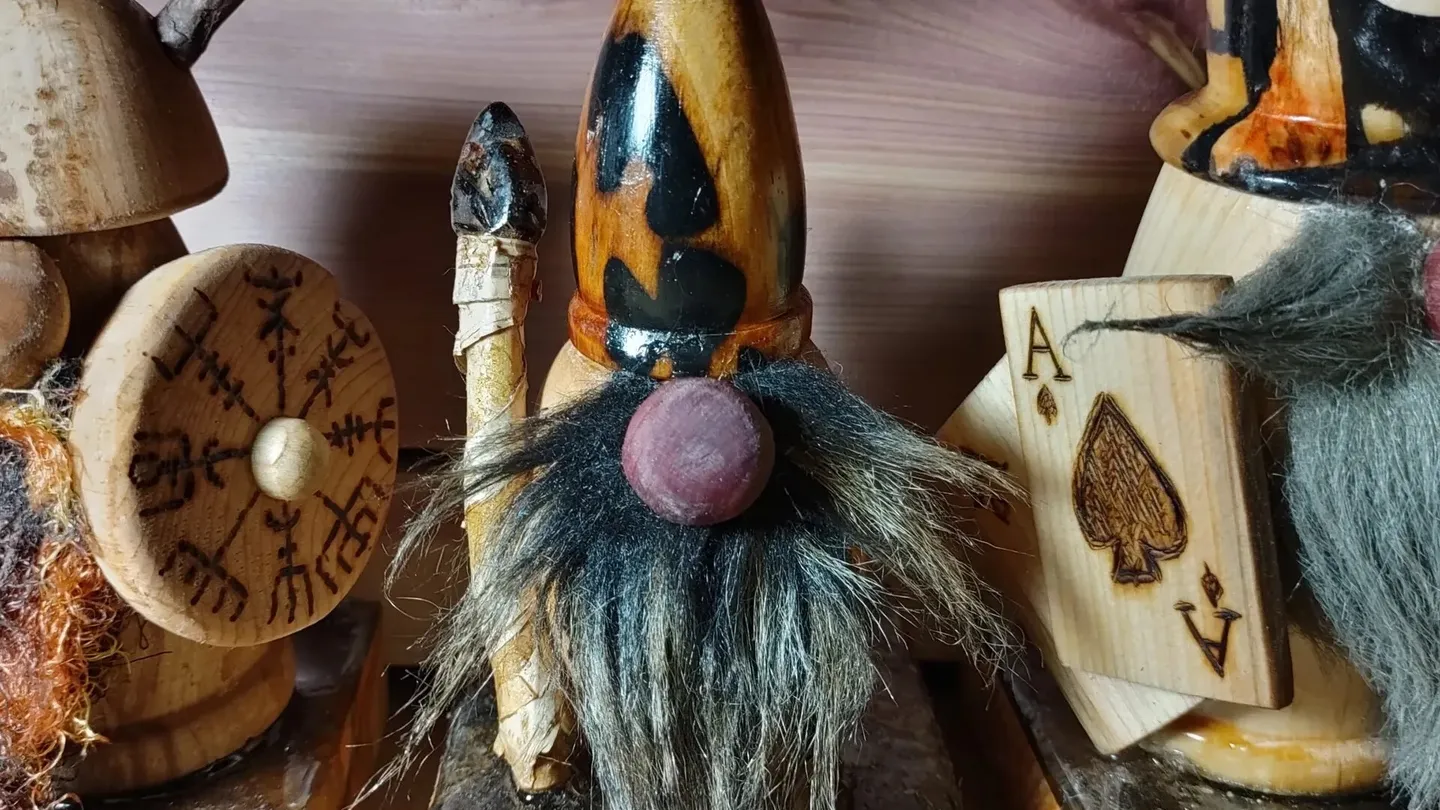
In almost every tradition of communal bathing, the bathhouse stood a little outside ordinary life. People took off their clothes and their valuables there, fire and water shared the same room, children were born there and the dead were washed there before burial. Many of these houses acquired invisible owners: the bannik in the banya, the saunatonttu in the sauna, jinn in the hammam, a goddess at the door of the temazcal.
This guide covers six traditions, with the source for each belief, and shows what reappears in the rules bathhouses publish today. Going with someone, keeping your voice down, leaving the room clean and locking up your belongings were already in these stories under other names.
Banya: the bannik and the fourth steam
In rural Russia, the banya was a log cabin set apart from the house, often of the “black” kind: no chimney, smoke leaving through the door and walls coated in soot. The folklorist Masha Vadeysha collected what 19th and 20th century ethnographic sources record about it in a 2005 article in the journal Folklorica.
The banya served the Saturday wash and also the moments that change a life. A woman went there after giving birth, a bride bathed on the eve of her wedding and people coming back from a funeral went to “wash away their grief”. At the same time, it was considered a dangerous place. Icons were never hung there, and on entering you had to take off your belt and your cross, something not done anywhere else.
The owner of the banya was the bannik (or baennik). The rules the article collects revolve around him:
- No one bathes alone. One account it quotes says that whoever goes to the banya alone may be torn apart by devils, so the Saturday wash was done in groups of two or more.
- The fourth steam is his. In most regions, once three groups have bathed, no one else goes in. The fourth round is left for the bannik, with warm water and a bundle of branches (the venik) set out for him.
- Silence. No noise, no loud talk, no hurrying others along, no swearing and no cursing anyone.
- Ask permission and say thank you. At the entrance people said a formula such as “master of the bathhouse, let me in to steam myself”. On the way out, they thanked him for the steam.
- Nothing at midnight. The right time was the afternoon, toward evening. Midnight was the hour of magic, and on the nights before Christmas, New Year and Epiphany the banya became a place for fortune-telling.
Anyone who broke the rules risked the bannik’s anger, described in one account as a spirit with iron arms. The historian W. F. Ryan used the scene for the title of his survey of magic and divination in Russia, The Bathhouse at Midnight (1999).
Finnish sauna: the saunatonttu and the löyly
Sauna culture in Finland was added to the UNESCO list of intangible cultural heritage in 2020. The entry describes the sauna as a traditionally sacred space and defines löyly as the spirit, or steam, that rises when water is thrown on the hot stones.
The living heritage inventory of the Finnish Heritage Agency records the belief that every sauna housed a protective spirit, an elf or guardian, and that it was good manners to greet it on entering. In folk tradition it is called the saunatonttu, the sauna elf (also saunan haltija), and it also keeps an eye on how people behave inside.
The same inventory lists uses the banya had too: giving birth, tending the sick and preparing the dead for burial. Labor was believed to be easier if the sauna was heated with wood from a tree struck by lightning. At Christmas, people kept silent in the sauna to avoid head lice the following year.
Finns sum up the conduct in a saying: behave in the sauna as you would in church (saunassa ollaan kuin kirkossa). The difference from Russia shows at the door. The Finnish inventory says a blessing was offered on entering, while in the banya the cross stayed outside.
Hammam: the jinn of the bath
The Englishman Edward William Lane lived in Cairo in the 1830s and described the city’s public bath in An Account of the Manners and Customs of the Modern Egyptians (1836), now in the public domain on Project Gutenberg. According to him, the bath was believed to be a favorite haunt of the jinn. Anyone about to enter should say a short prayer for protection against evil spirits and cross the threshold left foot first. For the same reason, no one prayed or recited the Quran inside.
In the next sentence, Lane moves from the invisible to the practical. Anyone carrying a watch or a purse with more than a trifling sum handed it all to the keeper of the bath, who locked it in a chest. The same visit guarded against jinn and thieves.
How a hammam works today is in Hammam: what it is, how the bath works and where it comes from.
Onsen and sento: the heron, the gods and the akaname
Dōgo Onsen, in Matsuyama, presents itself as Japan’s oldest hot spring, and its official site tells two origin stories. In the first, a heron with an injured leg bathed it in the spring every day until it healed, and the people who saw it began bathing there too. In the second, recorded in the Iyo no Kuni Fudoki, the god Sukunahikona fell ill while visiting the region. The god Ōkuninushi bathed him in the spring, and Sukunahikona recovered and danced on a stone to prove it. The stone, Tama-no-ishi, stands on the north side of the main building, the Honkan.
Japanese baths also have a smaller and less solemn creature. The akaname, or “filth licker”, is a yōkai that comes out at night to lick the grime and mold built up on tubs and walls. The name appears in Toriyama Sekien’s illustrated bestiary Gazu Hyakki Yagyō of 1776. A book from 1686 had already described a similar creature, the akaneburi, born from the filth of old bathhouses. In practice, the story reminded everyone to clean the bath.
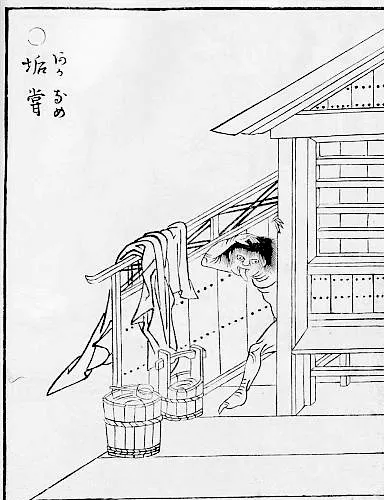
The akaname peers around a bathhouse in the Gazu Hyakki Yagyō, 1776. Illustration: Toriyama Sekien, public domain, via Wikimedia Commons.

Today’s rule is the same idea without the monster: at an onsen, Japan’s national tourism organization tells bathers to wash their whole body before getting into the water everyone shares.
Temazcal: the grandmother of the baths
In ancient Mexico, the steam bath had a goddess of its own. In Book 1 of the Florentine Codex, Fray Bernardino de Sahagún records that the owners of temazcales (from the Nahuatl temāzcalli, sweat bath) prayed to Toci, a goddess of medicine venerated by healers and midwives, and placed her image at the front of the bath. They called her Temazcalteci, “grandmother of the baths”.
Like the banya and the sauna, the temazcal served for childbirth and postpartum care, as well as hygiene and health. The tradition is still alive in Mexico, and today’s ritual is explained in Temazcal: qué es, para qué sirve, beneficios y riesgos, in Spanish.
Roman baths: the curses of Bath
In Bath, England, the hot spring was the sanctuary of the goddess Sulis Minerva, and Romans threw requests into it, written on small sheets of lead or pewter. Excavations in 1979 and 1980 recovered about 130 of these tablets, dating from the 2nd to the 4th century. Since 2014 they have been on the UK register of UNESCO’s Memory of the World programme.
Most ask for the return of a stolen object, and many concern clothes taken while their owner was bathing. A man named Docimedis lost two gloves and asked that the thief lose his mind and his eyes in the goddess’s temple. Another, Solinus, gave the goddess the bathing tunic and cloak that had been stolen from him and asked that the culprit be denied sleep and health until they were returned. Since the victim rarely knew who had done it, the tablets repeat a formula that covers any suspect: “whether man or woman, whether slave or free” (Wikipedia).
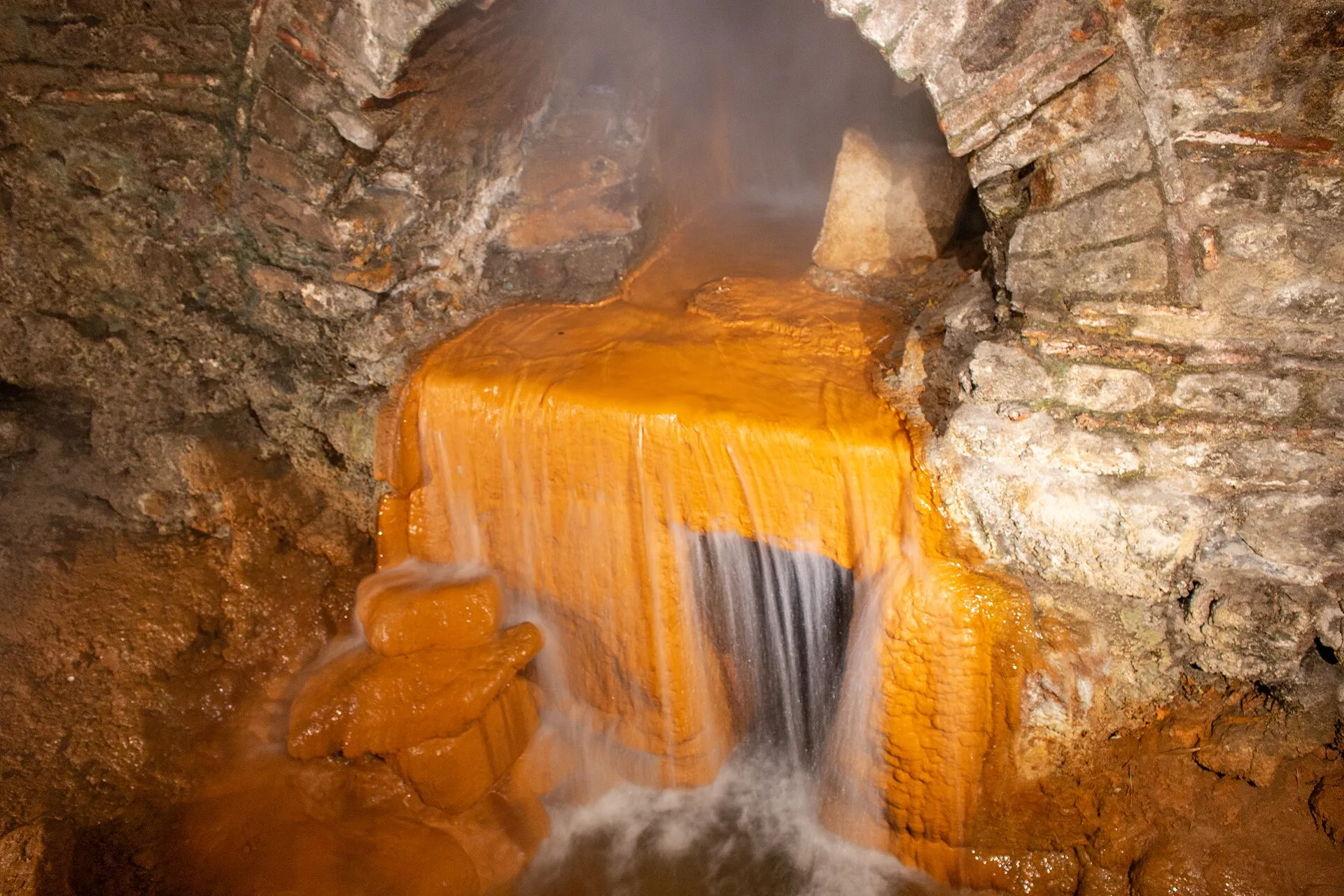
Water from the Sacred Spring still runs through the baths at Bath, stained orange by iron. Photograph: -JvL-, CC BY 2.0, via Wikimedia Commons.

How the baths worked across the rest of the Empire is in Roman baths: how the thermae worked.
What remains in today’s rules
In all of these traditions the bath was a place where people sat without clothes, close to fire, with other people and far from the protection of home. The stories gave names to the risks of the place: feeling unwell alone in the heat, a quarrel in a cramped room, the grime that builds up where many people wash, the theft of clothes left on the bench. Almost every rule a bathhouse publishes today answers one of those risks.
| Tradition | Belief | Rule that came with it | Today’s equivalent |
|---|---|---|---|
| Banya | The bannik attacks anyone bathing alone | Bathe in a group | Tell staff or the person next to you if you feel unwell in the heat |
| Banya | The bannik punishes noise and cursing | Silence, no swearing | Quiet rooms and signs asking for low voices |
| Finnish sauna | The saunatonttu watches over conduct | Greet it on entering, behave as in church | Ask before throwing water on the stones |
| Hammam in Cairo | Jinn frequent the bath | A prayer at the door; valuables handed to the keeper | A locker with a key at the front desk |
| Japanese bath | The akaname eats the grime of the bath | Keep the bath clean | Wash your body before entering the shared water |
| Baths at Bath | The goddess punishes theft at the baths | A curse on the thief | Lockers and a key wristband |
Two distant traditions reached the same idea by different routes. In the Russian banya the cross stayed outside, and in the Cairo bath the Quran was not recited. In both, the bath was treated as a place apart with rules of its own, and whoever went in accepted those rules along with the heat.
Next step: read The social side of the bathhouse to see why bathing was always communal, or open the Bathhouse map to find banyas, saunas, hammams and onsen open to the public.