Types of sauna: dry, steam, wood-fired and smoke
Compare electric, wood-fired, steam and smoke saunas, the shared rooms of a bathhouse. Learn what changes in the bathing experience and the build, and why a dry sauna can have steam.
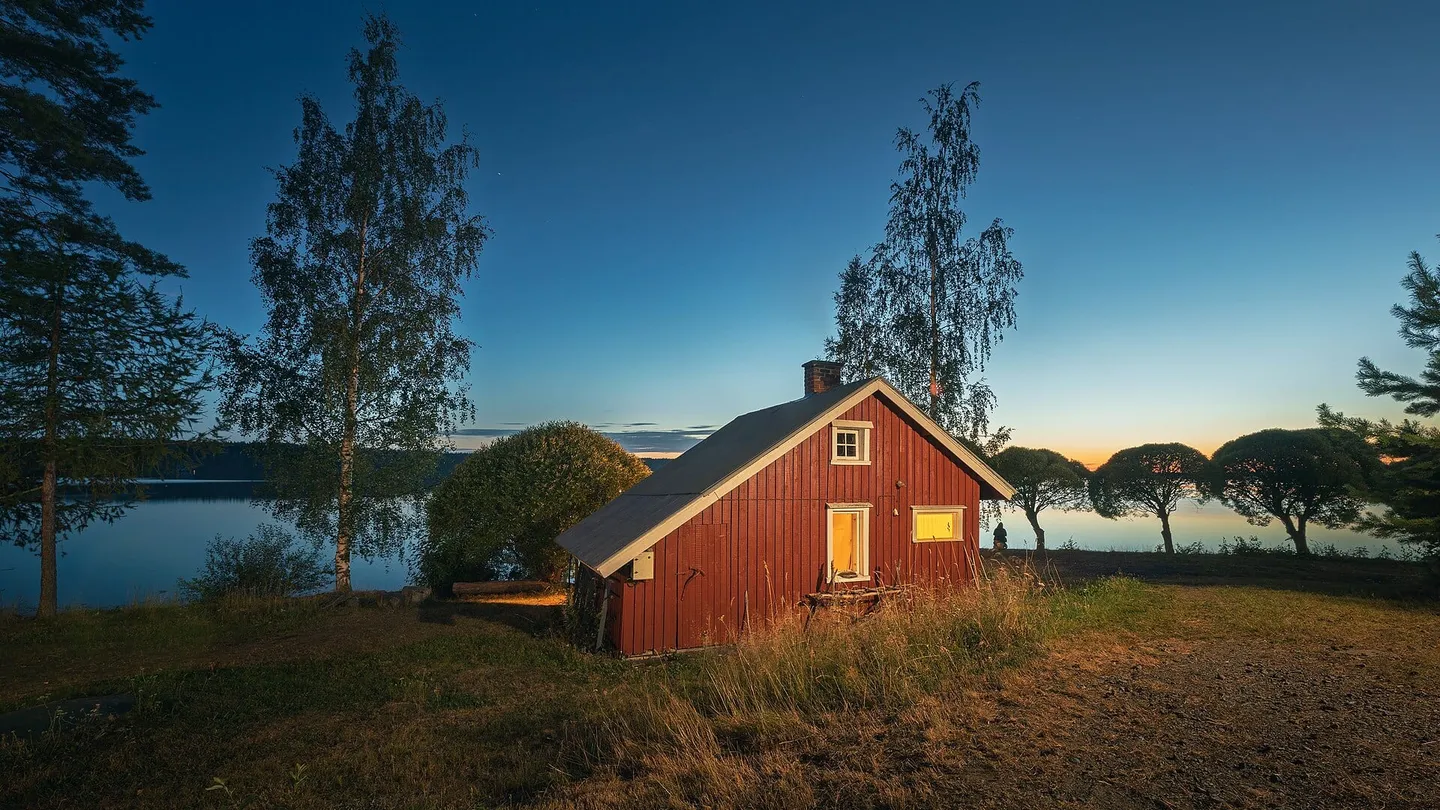

A sauna can be dry, Finnish and electric at the same time. It can also be Finnish and wood-fired. The confusion starts when traditions, energy sources and ways of heating the body are listed as though they were mutually exclusive choices.
To choose where to bathe or what to build, separate two questions: how the heat is produced, and what experience the room offers. “Dry or steam?” is a different comparison from “electric or wood-fired?”.
In a bathhouse, these are shared rooms: the type of sauna sets the heat and steam that everyone in the room shares during that bath.
The main types of sauna
Three formats commonly appear under the sauna label. This table compares heating systems, not countries of origin.
| Format | Where the heat comes from | What to consider before choosing |
|---|---|---|
| Electric sauna with stones | Electricity heats the assembly | Do you want stone-based bathing with electric controls? |
| Wood-fired sauna | Combustion heats the stone assembly | Is a fire part of the experience you want? |
| Steam room, sometimes called a steam sauna | A generator supplies steam to the room | Do you prefer sustained humidity? |
Technical sources are the Finnish Sauna Society on heaters and manufacturer Harvia on steam systems. The final column is our editorial guidance for choosing, not a quality ranking.
Dry or Finnish sauna: can it have steam?
A dry sauna can have steam. Löyly is the steam released when water meets hot stones. It belongs to Finnish bathing culture. “Dry” does not necessarily mean “no water”: the room can receive waves of steam without becoming a continuously humid steam room. The Finnish Sauna Society explains the custom.
When visiting, ask whether bathers may pour water on the stones or whether staff handle it. The name on the door does not replace the instructions for that heater or consideration for other bathers.
Electric sauna: stones without burning wood
Electric heaters use heating elements and temperature controls. They can also produce löyly when designed for water to be poured on the stones. As a technical example, Harvia’s documentation for The Wall Combi describes this use even with its additional steaming function switched off.
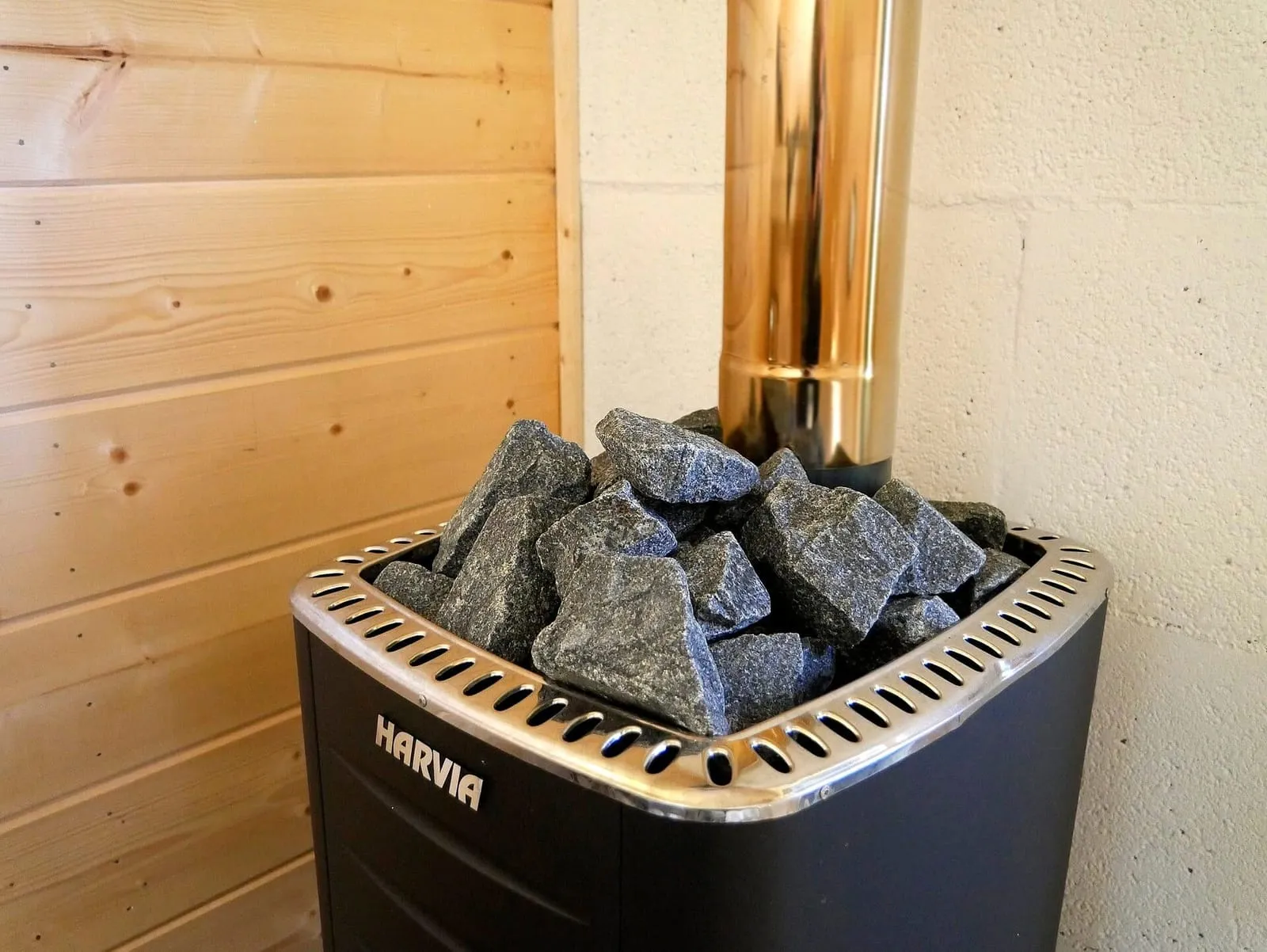
Electric heater with stones: elements and a thermostat, and löyly when it is designed to take water. Photograph: Santeri Viinamäki, CC BY-SA 4.0, via Wikimedia Commons.

For a build, this is an option to consider when you want a stone-based sauna without a combustion source. The room still needs a design. Harvia advises accounting for glazing, dimensions and power supply before installation, with professional electrical work. See its sauna design guide.
When comparing venues, do not dismiss a sauna because it is electric. Visit the room: the heater label alone tells you little about how comfortable the bath will be.
Wood-fired sauna: making room for the fire
In a wood-fired sauna with a chimney, combustion smoke leaves through the flue. Some heaters keep burning during bathing; others store heat beforehand. The Finnish Sauna Society’s classification distinguishes between them. Timo Aaltonen records in Sauna finlandesa (Edicon, 3rd edition, 2015) that the chimney only reached the sauna stove at the end of the nineteenth century, and that the chimney stove is what allowed saunas to be built next to houses, inside cities, and made the public saunas of the early twentieth century possible.
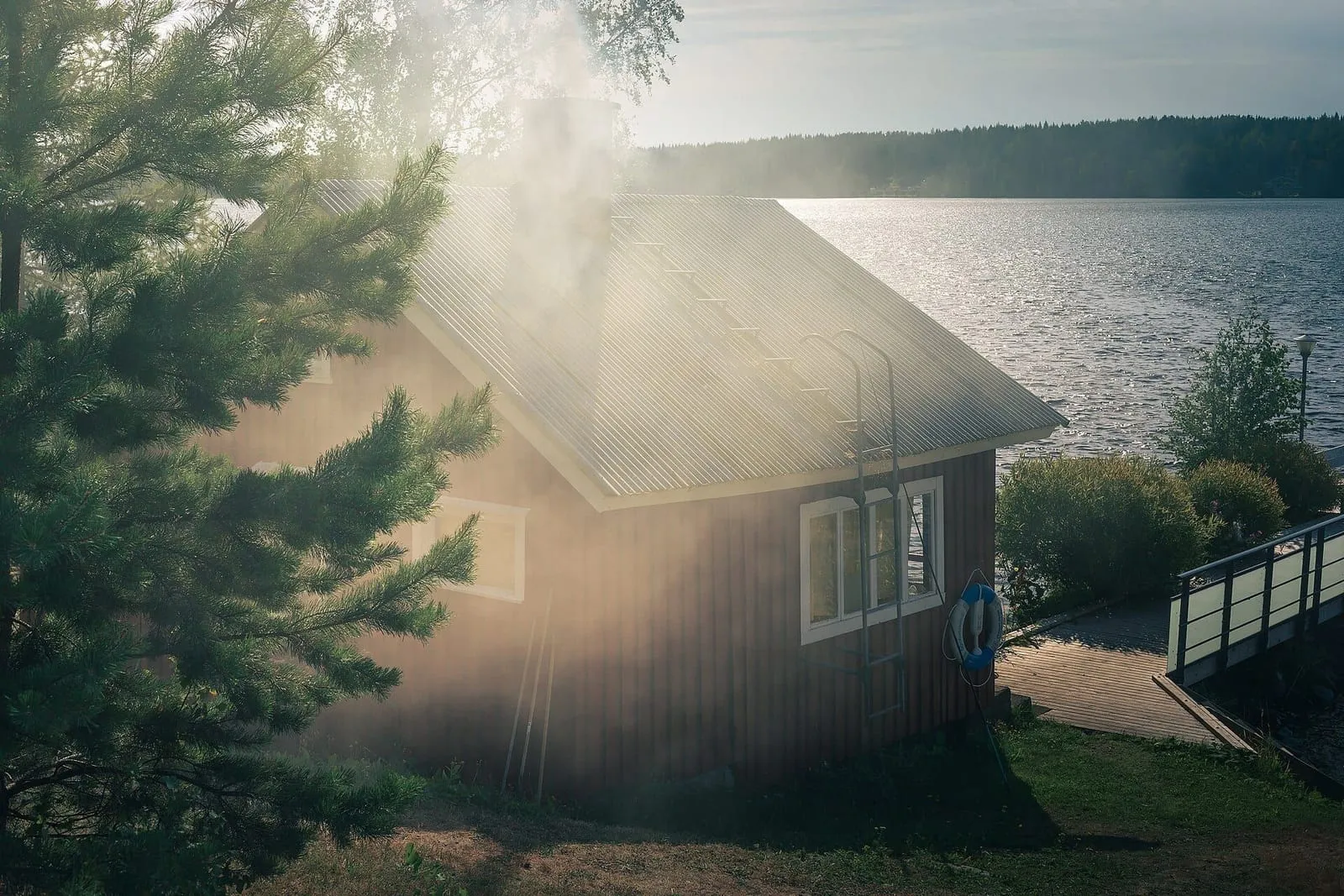
Wood-fired sauna in Kitee, Finland: with a chimney, the smoke leaves through the flue while the room heats up. Photograph: Ximonic (Simo Räsänen), CC BY-SA 4.0, via Wikimedia Commons.

If you are designing a space, treat the fire as a design decision from the start. Ask your designer to assess heater placement and the smoke outlet before you settle on a floor plan. For a visit, ask whether watching the fire is part of the experience: “wood-fired” does not guarantee that bathers can see the firebox.
Steam room: a different room and a different build
A steam room has its own generator. Its construction needs to handle water and condensation: waterproofing, drainage and suitable surfaces are part of the system. In Harvia’s technical guide, the generator sits outside the room in a dry, ventilated location.
Look beyond the finishes. Ask for a quote covering the complete room, including where the equipment will go. Replacing wood with tiles is not enough to turn a stone-based sauna into a steam room.
Smoke sauna: wood-fired without a chimney
A smoke sauna has no chimney: smoke passes through the room during heating, which takes five to six hours according to Aaltonen. UNESCO recognizes the smoke sauna tradition of Võromaa, Estonia, which includes communal bathing and knowledge passed between generations.
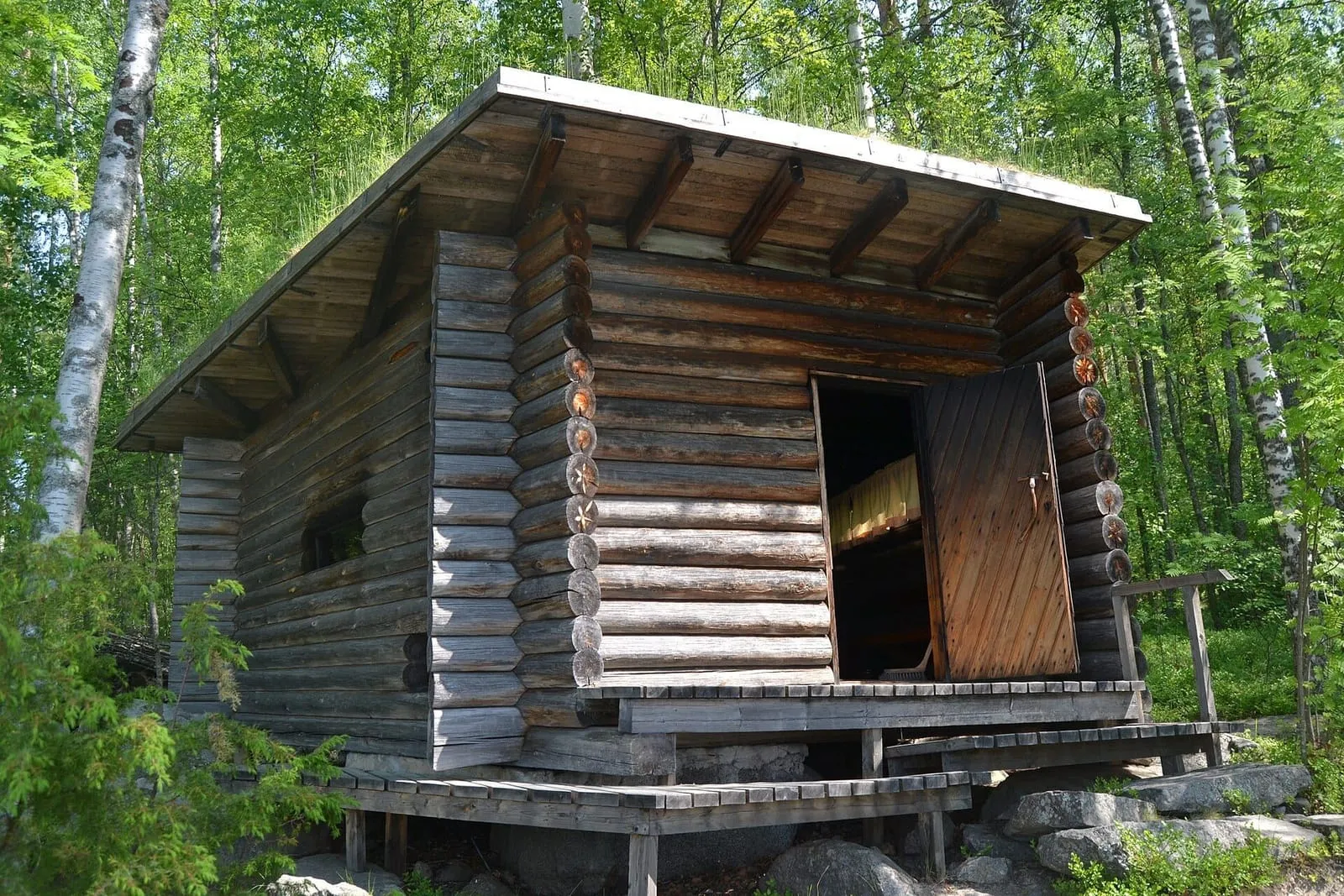
Alvar Aalto’s smoke sauna at Muuratsalo: no chimney, so the smoke fills the room while it heats. Photograph: Antti Leppänen, CC BY 4.0, via Wikimedia Commons.

This does not mean bathing while breathing smoke. The Finnish Sauna Society stresses extinguishing the embers and clearing the smoke before bathing, with particular attention to carbon monoxide. This tradition requires specific expertise.
An aside: the infrared cabin
An infrared cabin is usually a solo cabin, and it sits outside the shared-room line of this guide. Its emitters heat the body directly through radiation, without stones or water steam; hybrid saunas combine emitters with a traditional heater, according to Harvia. If pouring water on stones and sharing that moment with other people is what appeals to you, check what the venue offers, because “infrared” does not describe the same experience.
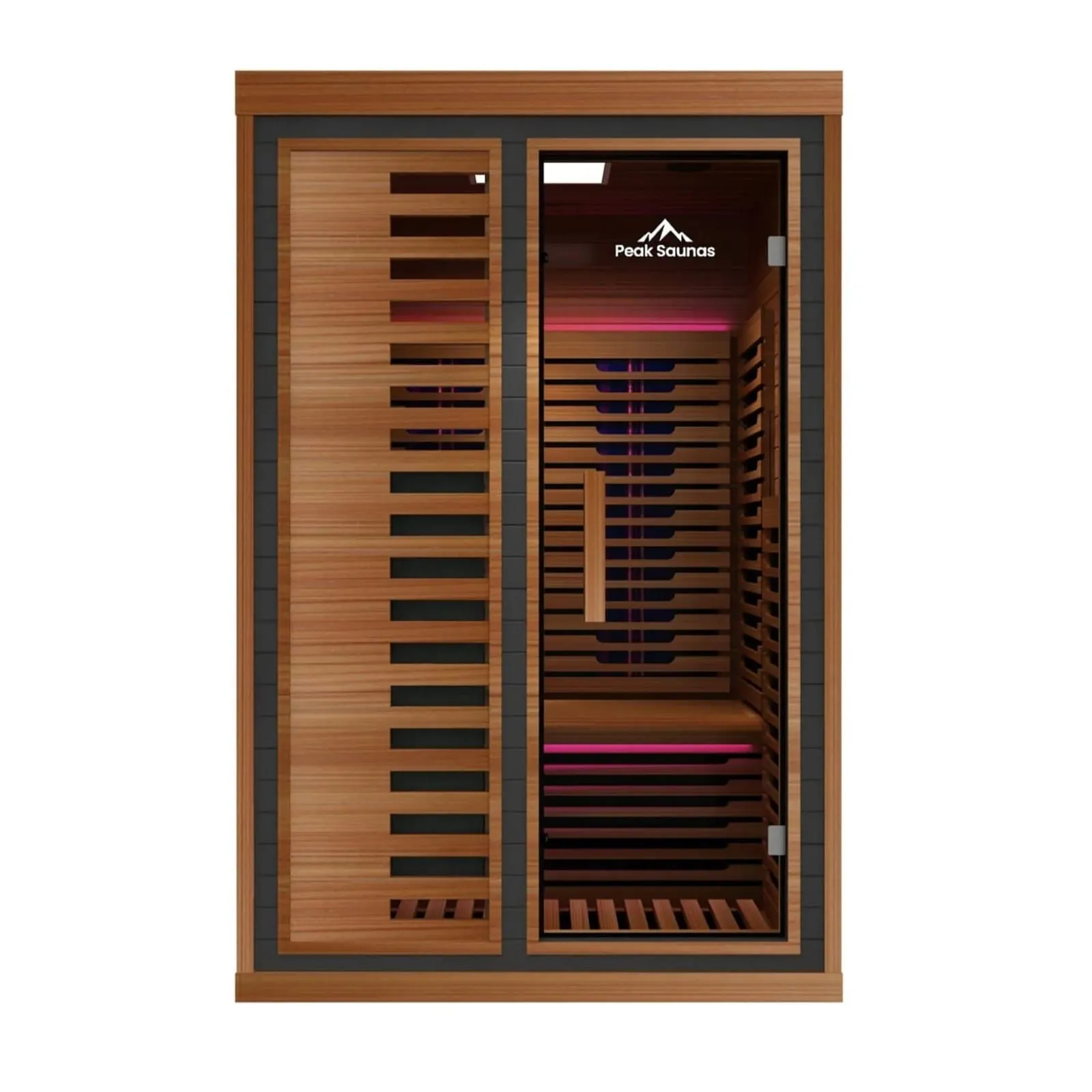
Infrared cabin: the emitters heat the body by radiation, with no stones and no löyly. Photograph: Peak Saunas, CC0, via Wikimedia Commons.

How to choose without getting lost in the names
For a visit, look for a description of the experience: whether there will be water on stones, continuous steam, a visible fire or emitters alone. Check clothing, quiet hours and shared-room etiquette too. An equipment list does not tell you what the bath will be like.
For a build, write down what you want to offer first. Then commission a design assessment for that system and that property. Compare proposals for the same experience, rather than prices for heaters that deliver different things.
This comparison covers formats. For first-session advice, benefits and precautions, read our sauna guide. If you are considering a project, the next step is understanding what goes into the cost of building a bathhouse. To try a few before deciding, explore the Bathhouse map.