Sauna: what it is for, the types and how to use a shared sauna
What a sauna is, the difference between dry and steam, and how to use a sauna you share with other people: the bench, the shower, the towel, the quiet and asking before you throw water on the stones. With a short note on health.
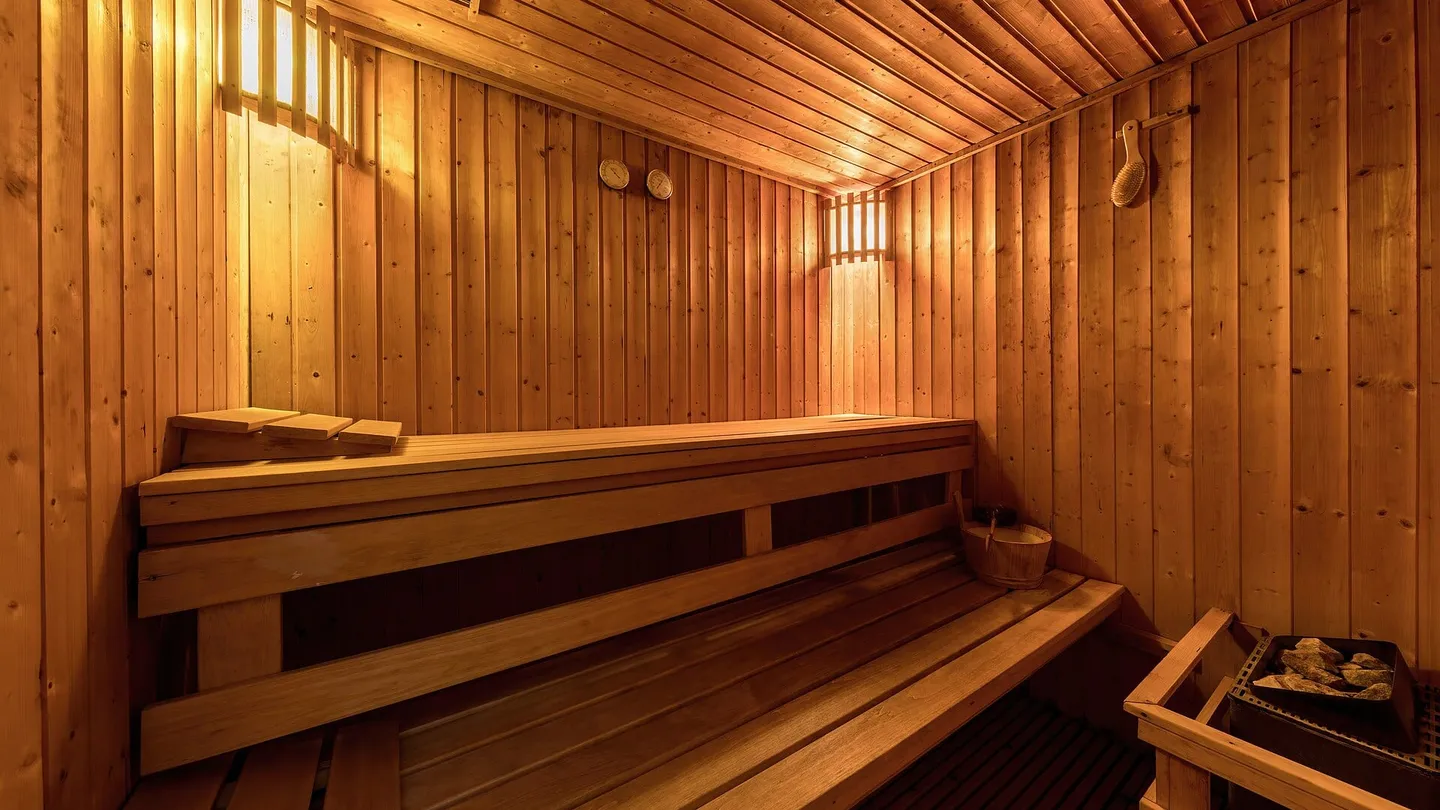

A sauna is, before any health promise, a hot room. You go in, stay while your body is comfortable, come out to cool down, and rest. In a public sauna, a club or a bathhouse, you repeat that cycle next to other people, strangers included, and the bench, the steam and the quiet are shared.
That simple definition clears up two common confusions. A sauna is not a synonym for a spa, because massage and treatment are not required. A cabin for sweating also does not describe the format fully: in the Finnish tradition, the bath includes löyly, the brief wave of steam that rises when water is thrown on the hot stones, along with the cooling, the rest and the company.
In everyday use the word covers different things: the dry sauna at a club, the steam room, the infrared cabin, and sometimes any warm space inside a spa. This guide separates the formats, explains how a sauna shared with other people works, and sums up what the research says about health.
What a sauna is
The Finnish sauna is a wood-lined room heated by an electric or wood-fired stove. Stones on the heater store heat. When water hits them they produce a short surge of steam, the löyly. Air temperature tends to be high and average humidity stays low between one ladle of water and the next. Timo Aaltonen, in Sauna finlandesa (Edicon, 3rd edition, 2015), puts the usual range at 80 °C to 90 °C, measured at head height on the top bench, and describes a session above 100 °C as an endurance test rather than a bath.
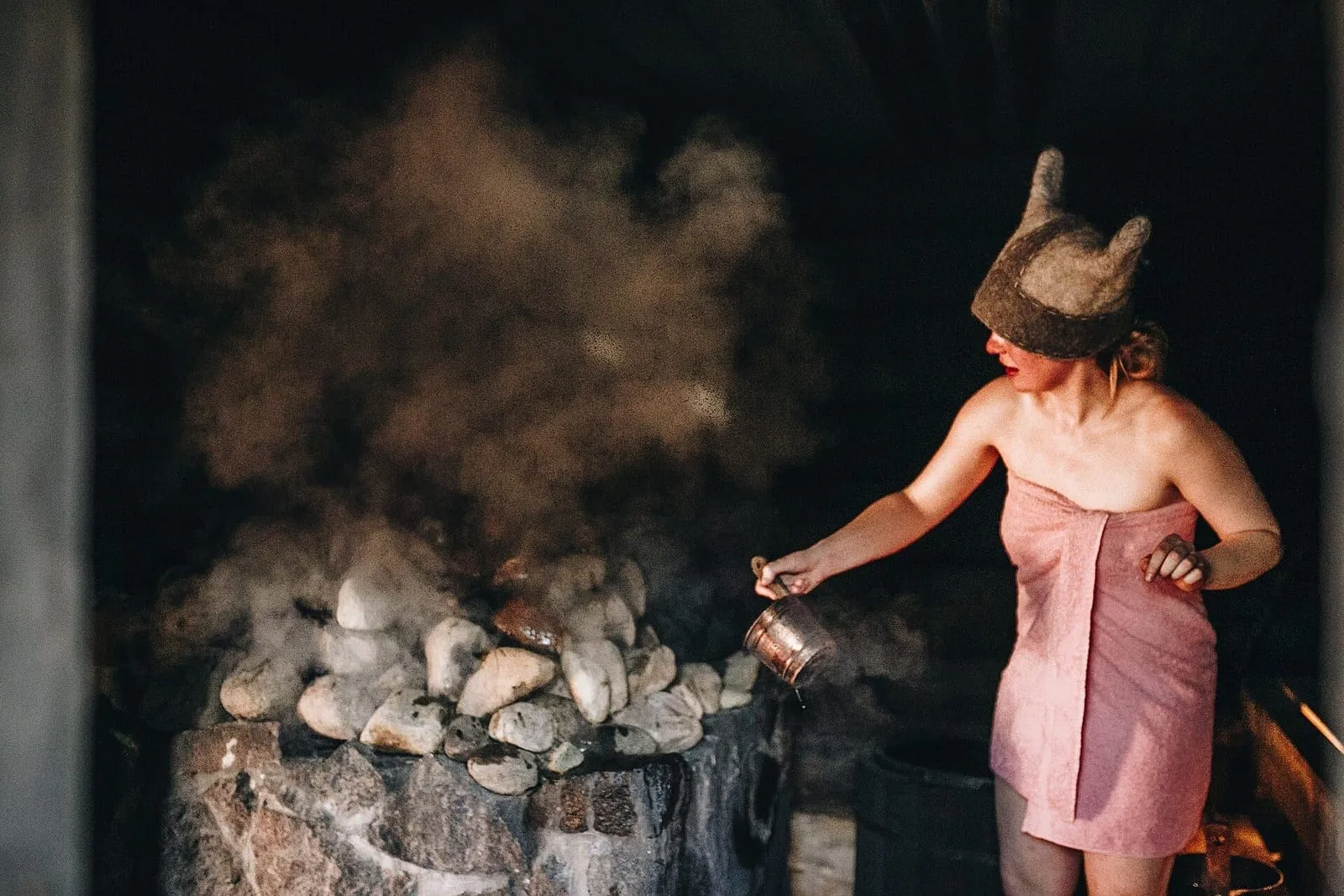
Water on the stones in a smoke sauna in southern Estonia: the brief steam that rises is löyly. Photograph: Estoniansaunas, CC BY-SA 4.0, via Wikimedia Commons.

The bath does not only happen while you are sitting on the bench. It includes the shower beforehand, the time in the heat, the cooling and the rest. The Finnish Sauna Society treats calm, respect for other people and the freedom to leave as part of the culture. Competing to see who can take the most heat goes against that logic.
Dry sauna and steam room
Both formats heat the body, but they do not create the same experience.
| Format | How it heats | What the room feels like | Where it shows up most |
|---|---|---|---|
| Dry or Finnish sauna | Heater and stones raise the air temperature; water on the stones creates löyly | Hot air, wood, brief spikes of humidity | Public saunas, clubs and bathhouses |
| Steam room | A generator continuously injects steam into a waterproofed room | Very high humidity and lower air temperature | Clubs, bathhouses, hotels and spas |
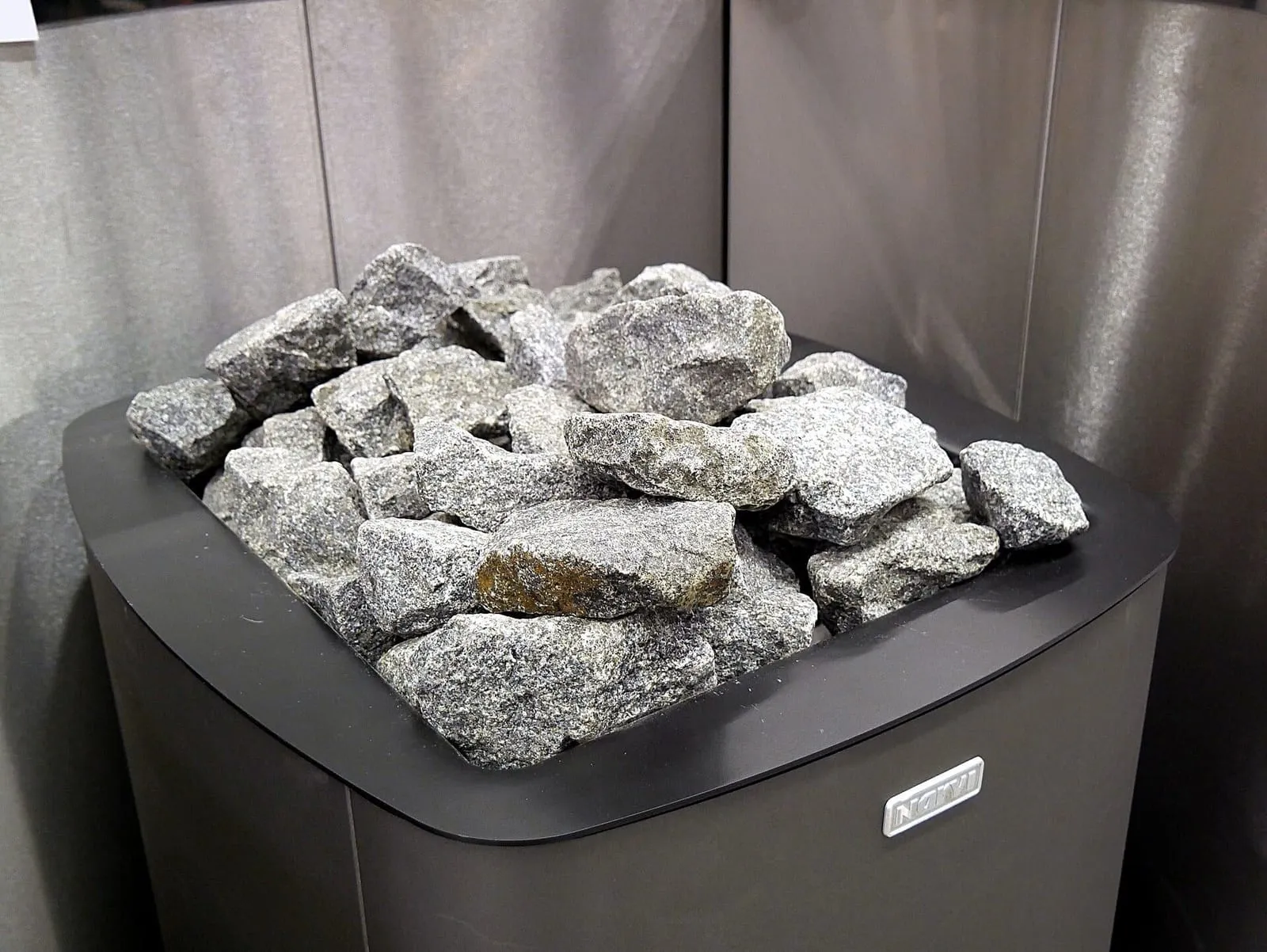
The stones on the heater store the heat and, when they receive water, produce löyly. Photograph: Santeri Viinamäki, CC BY-SA 4.0, via Wikimedia Commons.

In everyday language, “steam sauna” is an understandable phrase. Technically, it is closer to a steam room than to a Finnish sauna. The difference matters for design: wood, waterproofing, ventilation, drainage and heat source all change from one system to the other.
An aside on infrared saunas. Emitters mainly heat the body and the surfaces, with lower air temperature and little humidity. It is usually a single-person cabin, common in studios, wellness clinics and homes, so it sits outside the shared room this guide is about.
Who is in the room: how a shared sauna works
The first fact about a shared sauna is how many people it holds at once. Löyly, in Helsinki, says on its site that each of its two public saunas holds around 20 bathers, that the saunas and public areas are mixed, and that swimsuits are required. Rajaportti, in Tampere, opened in 1906 and still wood-fired, has separate sections for men and women, as The social side of the bathhouse describes.
Sharing the room does not by itself settle how it works. Each venue decides a few things, and it helps to know which before you go in:
| Question | Common possibilities |
|---|---|
| Who shares the room? | Mixed group, separate sections, alternating hours |
| What do people wear? | Nothing, a swimsuit, a towel or clothing supplied by the venue |
| What is the mood? | Silent, low conversation or a guided ritual |
| Who throws water on the stones? | Whoever is in the room, after asking, or staff, in a scheduled session |
The venue’s own rules count for more than any general pattern. Check the site, the confirmation email and the signs at the door; if they disagree, ask at the front desk. The wider etiquette is in the guide to communal bathing.
Shared sauna etiquette
A few rules show up in almost every sauna shared with other people, because they protect the room and the people in it:
- Shower before you go in and dry off. Shower again before entering a pool after the sauna.
- Sit on your towel. In Budapest, the Széchenyi bath rules make a textile between your body and the bench mandatory.
- Pick your bench and leave a path. The lower bench is usually less hot. Give people room to come in or leave without climbing over anyone.
- Ask before throwing water on the stones. Löyly changes the room for everyone at once. Ask, or make eye contact, before a full ladle, and do not touch controls, vents or doors that staff manage.
- Match the volume of the room. If people are speaking softly, do the same; if everyone is silent, the silence is part of the bath. Longer conversations belong in the rest area.
- Leave your phone in the locker. A camera has no place in a room where people are in towels or undressed, and the Széchenyi baths do not allow electronic devices in the saunas without the bath manager’s approval.
- Leave when your body tells you to. Nobody is timing the person next to them.
How to use a sauna for the first time
There is no universal timer. Your body, the temperature and the height of the bench matter more than hitting a number.
- Start on a lower bench, where the air is usually less hot.
- Stay 5 to 10 minutes in the first round, or less if you feel uncomfortable.
- Get up slowly, get some air, take a cool shower or just rest.
- Drink water and wait for your breathing to settle.
- Repeat only if you feel well.
The 8 to 15 minute range comes up often because it fits a comfortable session for many adults, but it should not work as a target. Dizziness, nausea, headache, palpitations or feeling faint are signs to leave, and staying for less time does not make it a “worse” sauna.
A short note on health
For a healthy person, a session produces predictable immediate responses: warmer skin, a higher heart rate, dilated peripheral vessels and sweat. A 2018 systematic review gathered 40 studies with 3,855 participants and found potentially favorable results for regular dry sauna use, but only 13 were randomized trials and many had fewer than 40 participants. Studies of dry saunas do not automatically prove the same things for steam or infrared.
Some popular claims go beyond what the research shows. Sweat helps control temperature, and the liver and kidneys remain the main systems for clearing substances. The scale drops from water loss, which comes back with hydration. More heat raises thermal stress without making the session more effective, and sitting in the heat does not replace exercise.
Who should be more careful
Intense heat dilates blood vessels and temporarily changes heart rate and blood pressure. The American Heart Association advises people with high blood pressure to talk to their health professional when in doubt, to avoid moving abruptly between sauna and cold water if their blood pressure is high, and not to mix alcohol with sauna.
Anyone with cardiovascular disease, uncontrolled blood pressure, a history of fainting, difficulty regulating body temperature, a pregnancy, or medication that affects blood pressure, heart rate or sweating should seek individual advice before a session. Fever, dehydration and recent alcohol are also reasons to wait. In a shared sauna, tell staff if you feel unwell.
Dry sauna or steam: which to choose
For a visit, the choice is mostly sensory. A dry sauna offers hotter air, wood and löyly. Steam wraps the body in continuous humidity and often feels intense even at a lower temperature. Try both without using discomfort as a measure of quality.
If you are thinking of opening a space, the first number is how many people the room holds at once, and the heater comes after. A dry sauna needs suitable wood, insulation, a heater, stones and well-designed ventilation; a steam room needs rigorous waterproofing, drainage, washable surfaces, a generator and condensation control. Read how much a bathhouse costs to build before choosing the equipment: capacity, session length and wet area come before the brand.
A sauna is for heating up, pausing and sharing a hot room with other people; its possible health effects are still a subject of research.
Next step: read Contrast therapy: the hot and cold cycle in a shared circuit to understand what changes when cold enters the cycle, or open the Bathhouse map to look for a shared sauna near you.