Contrast therapy: the hot and cold cycle in a shared circuit
Sauna, cold water and rest in rooms you share with other people: a shared cold pool or a single tub, waiting your turn, rinsing before the cold, the rest area and the house rules. Plus what the research shows and who should be careful.
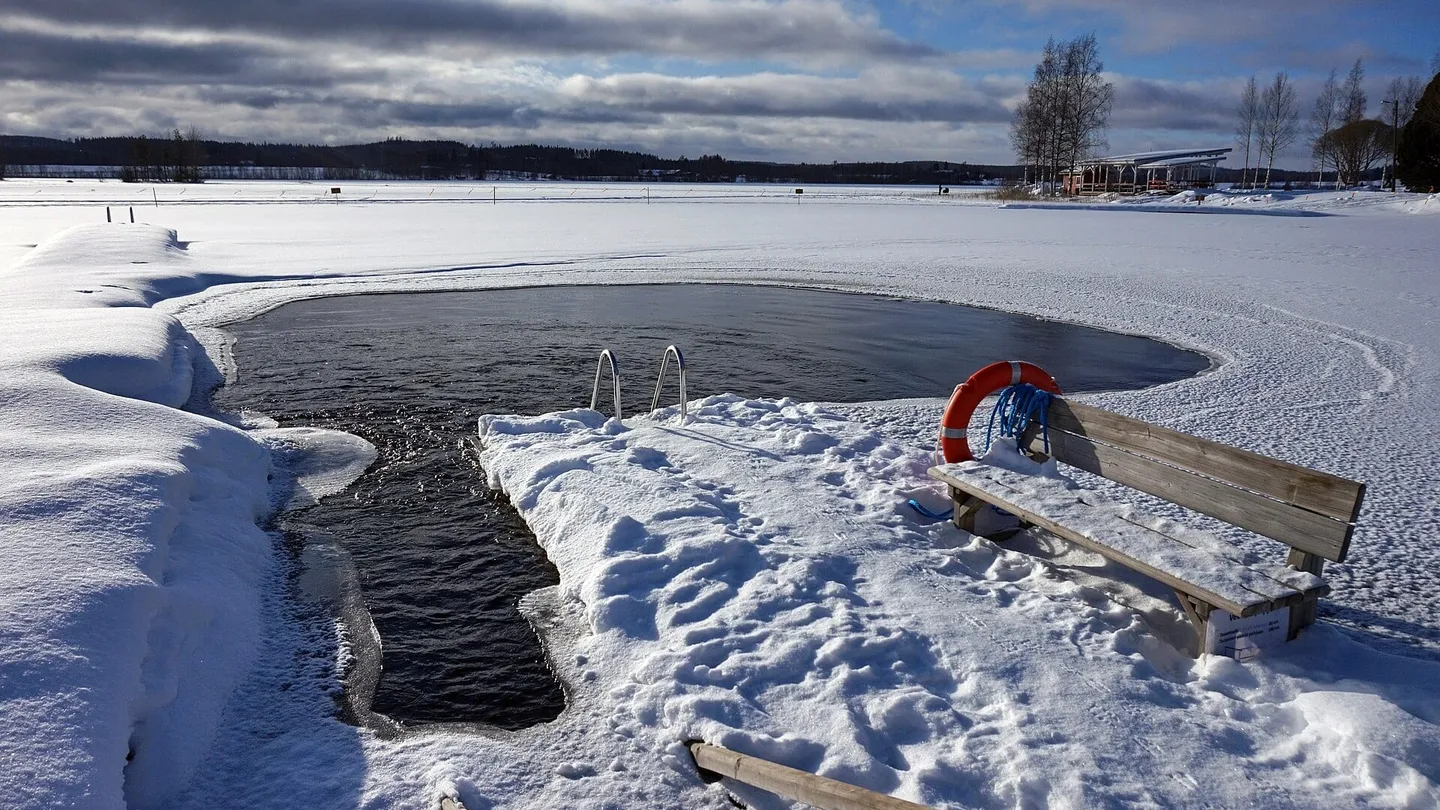
Photograph: Tiia Monto, CC BY-SA 4.0, via Wikimedia Commons

Sauna, cold water and rest make up the cycle that organizes a visit to many bathhouses. In social bathing, all three stages happen in rooms shared with other people, strangers included: the sauna bench, the cold pool or tub, the shower and the loungers in the rest area.
Sharing the room changes the cycle more than the advertised temperature does. This guide shows how contrast works in a shared circuit (the cold water, the queue, the shower, the rest and the house rules), sums up what the research says, and lists who should be more careful with the cold.
What contrast therapy means
Broadly, it is alternating heat and cold with rest in between. In a bathhouse the heat is usually a dry or steam sauna; the cold is a pool, a tub, a bath or a shower; rest happens between stages. The cycle can be repeated, and there is no universal protocol.
The shared cold room is old. In the Roman baths, the frigidarium was the cold hall and, in large complexes, the architectural centerpiece of the building, often with cold plunge basins. The sequence of the building is in the guide to the Roman baths.
In heat, the skin warms, peripheral vessels dilate and the body tries to shed heat. In cold, the opposite response: vasoconstriction, faster breathing, and a momentary rise in heart rate and blood pressure. A review of cold water immersion describes these cardiovascular, respiratory and metabolic changes.
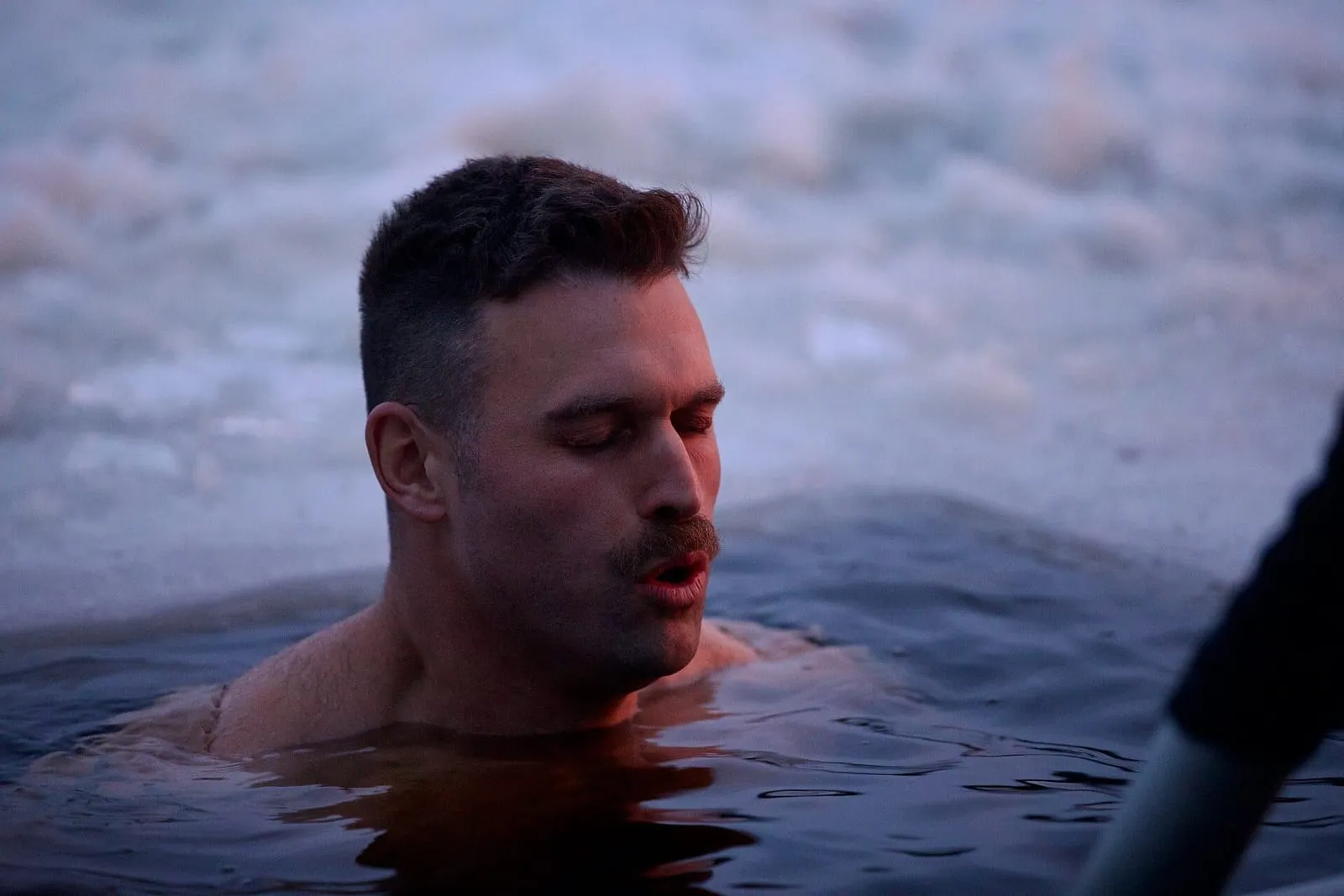
Avanto, the ice-hole swim, in Finland: vasoconstriction, faster breathing and a brief spike in blood pressure. Photograph: Staff Sgt. Marc Heaton, U.S. Army National Guard, public domain, via Wikimedia Commons.
.jpg)
The cold in a shared circuit
The first question about a venue’s cold is how it is shared. The common formats ask different things of the people using them:
| Cold format | How it is shared | What it asks of you |
|---|---|---|
| Shared cold pool | Several people in the same water at once | Shower first, use the ladder, no jumping |
| Single tub or plunge in the shared area | One person at a time, with a queue | A short dip, then out to free your turn |
| Sea, lake or ice hole | Shared access by a ladder or a pier | Get in and out where indicated; swimming depends on the weather |
| Cold shower or bucket | One person at a time, quick turnover | Little waiting, no immersion |
Löyly, in Helsinki, is an example of the third format. The venue’s site says each of its two public saunas holds around 20 bathers at a time, that the saunas and public areas are mixed, that swimsuits are required, and that the saunas open directly onto the sea, with swimming all year when the weather allows.
A studio that sells an hour with one ice tub per person, in a private room, is a different format. The subject here is the cold inside a circuit where the rooms belong to everyone.
Your turn, the shower and other people’s space
Rules change from house to house, but some show up in almost every shared circuit:
- Shower before the sauna and again before the cold water. Sweat and skin products stay in the shower, and the cold pool keeps working for everyone. It is the same logic as the Japanese bath, where you wash before entering the shared water. The wider etiquette is in the guide to communal bathing.
- In the queue for a single tub, keep the dip short. The people waiting have usually just left the sauna and are hot. Get out and free your turn.
- Enter the cold pool slowly. No jumping, no splashing whoever is already in, and no blocking the ladder.
- Take your towel into the sauna and keep it out of the water. In Budapest, the Széchenyi bath rules make a textile between your body and the sauna bench mandatory.
- Ask before throwing water on the stones. Löyly changes the room for everyone at once; Visit Finland asks you to be considerate of the people around you.
- Leave your phone in the locker. The Széchenyi baths do not allow electronic devices in the saunas without the bath manager’s approval.
- Leave when your body tells you to. Nobody is timing the person next to them, and leaving early does not mean you missed the round.
Rest is the social part of the cycle
Nobody stays two hours straight in the heat or the cold. Conversation, when it happens, happens in the interval: in the rest area, in the courtyard, in the line for the shower. That is why a practical design rule is that the rest area should hold at least as many people as the sauna, as the guide to what a bathhouse costs to build explains.
Rest does not always mean talking. The German Ruheraum is a declared silent room, and onsen etiquette in Japan asks for low voices. Many venues have one silent room and one for conversation; when the door does not say, ask at the front desk. What heat does to company is in The social side of the bathhouse.
House rules and guided rounds
Many venues run part of the cycle on a fixed schedule, with someone leading it: aufguss in the sauna, a guided plunge, a breathing sequence. In a guided round, everyone goes in and out together, and the group sets the pace. In the open circuit, each person runs their own cycle and shares the rooms with whoever is there.
Before you go, check the site or ask:
- whether the circuit is mixed or separated, and at what times;
- whether swimwear is required, and where;
- whether there is a queue or a time limit at the single tub;
- which rooms are silent;
- whether staff are on hand to guide beginners.
What the research shows, in short
Most of the research is about recovery after exercise, using alternating hot and cold water immersion. That is not quite the same as stepping out of an 80 °C sauna into an ice tub. A 2013 systematic review found better results than passive rest on some recovery outcomes, with a high risk of bias in the studies; a 2024 meta-analysis and another review and meta-analysis reached mixed results against cryotherapy and cold water immersion on its own.
On sleep, stress and well-being, the 2025 review of cold bathing found some favorable signs, with few trials and small samples, and no significant immediate effect on immune function. Regular sauna use has its own literature, but a systematic review noted that most trials were small. It is possible that the ritual, the distance from the phone, the pause in the calendar and the company matter as much as the water in how good you feel afterward.
The available evidence does not support claims that the cycle “flushes out toxins”, “kills inflammation”, burns fat without changes to food and activity, or works as a treatment for anxiety, depression, metabolic disease or injury.
Who should be more careful with contrast
Abrupt cold asks a lot of the cardiovascular system. The American Heart Association warns that immersion can rapidly raise breathing, heart rate and blood pressure, and recommends particular caution for people with a cardiac history.
Anyone with heart disease, uncontrolled blood pressure, arrhythmia, a history of fainting, or a condition affecting the response to heat and cold should talk first to the health professional managing their case. The same goes during pregnancy, with medication that affects blood pressure or heart rate, and while recovering from illness or injury. Alcohol and contrast do not go together.
In a shared circuit, tell staff if you feel dizzy or unwell, and choose a venue that makes the rules visible and lets you leave the cold at any moment.
Next step: read The social side of the bathhouse to see how design decides whether people talk, or open the Bathhouse map to find a shared circuit near you.