The wet sauna myth: sauna, steam room and hammam
What is often called a wet sauna is a steam room. Understand how it differs from a Finnish sauna, why löyly matters and why hammam means something else.
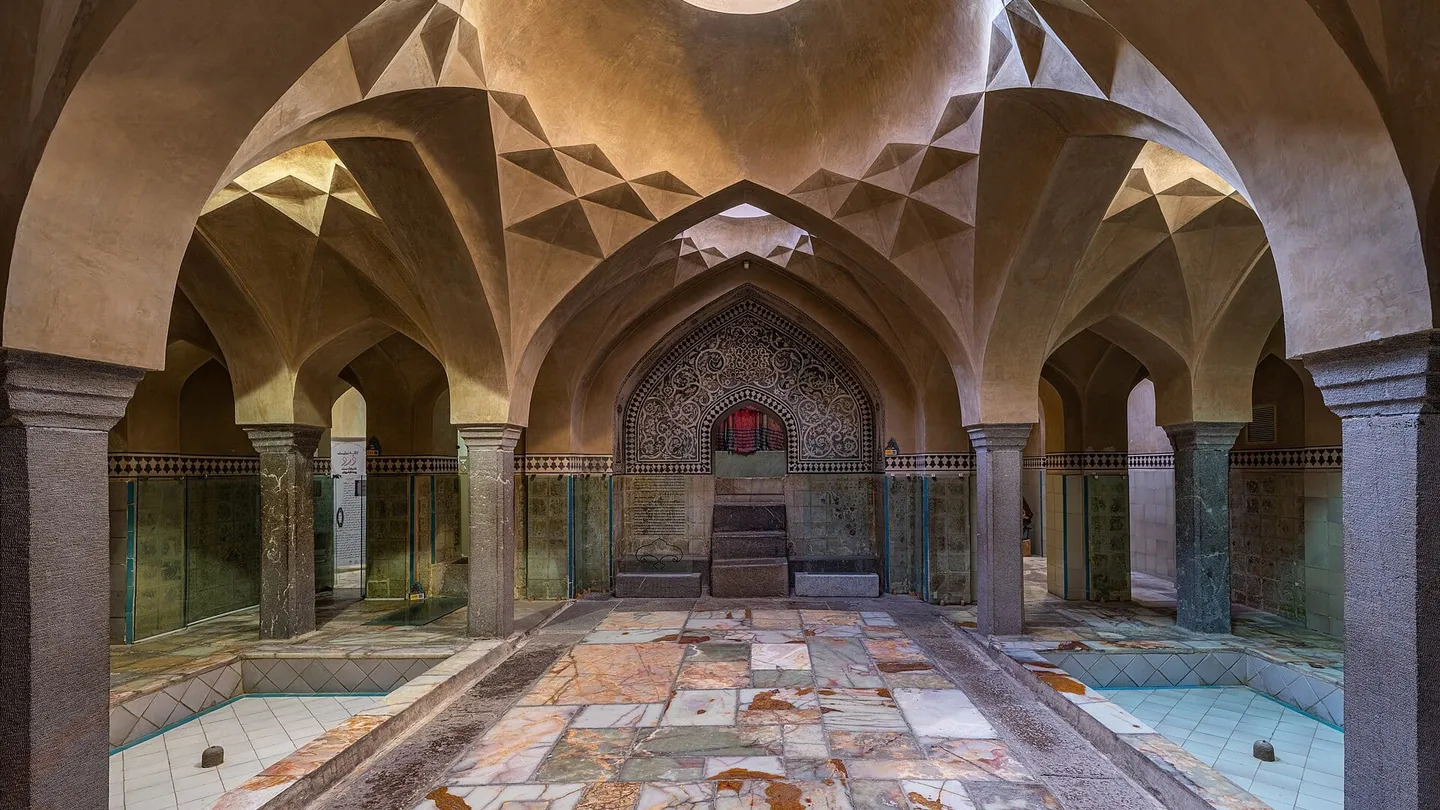
Photograph: Amirpashaei, CC BY-SA 4.0, via Wikimedia Commons

In Brazil, saunas are commonly divided into two types: dry and wet. On a club sign, in a hotel description or in a discussion about what to build, choosing between them can sound like a matter of how much steam you want. That division puts different experiences under one name.
In a shared hot room, the label on the door is the first thing a visitor reads. Inside there are other people on the benches, and the custom is to ask them before pouring water on the stones.
What is often called a “wet sauna” is a steam room. The expression is common in Portuguese, but it hides a useful distinction for anyone visiting a venue or planning a project. If you encounter the same wording in English, check what the venue actually offers.
A steam room has its own name
In a traditional Finnish sauna, a heater heats stones, and water poured over them produces steam. In a steam room, a generator supplies steam to the room. Steam bathing uses lower temperatures and higher humidity. Tylö compares these formats. Timo Aaltonen, in Sauna finlandesa (Edicon, 3rd edition, 2015), gives the order of magnitude: 80 °C to 90 °C in a Finnish sauna, measured at head height on the top bench, and around 45 °C in a steam bath.
“Steam room” describes that space more clearly than treating everything as a wet version of a sauna, and the distinction helps visitors understand the offer and helps anyone planning a build request a quote for the right system.
Where “dry” and “wet” came from
Aaltonen traces the two Brazilian labels to hotels. Until the middle of the twentieth century, he writes, the most common hot bath in Brazil was the Turkish bath, a steam bath installed mostly in luxury hotels. As the word sauna spread internationally, that steam bath came to be called a “wet sauna”. In the same period some hotels built rooms heated by electricity or gas, with no water in the room, and those became known as “dry saunas”.
Both names therefore described hotel installations. Neither was the Finnish sauna, in which the stones receive water.
The Finnish sauna also uses water
Saying that a real sauna is always dry seems to settle the confusion, but it leaves out a central part of Finnish sauna bathing: löyly, the steam released when water meets hot stones. UNESCO highlights it in its recognition of sauna culture in Finland.
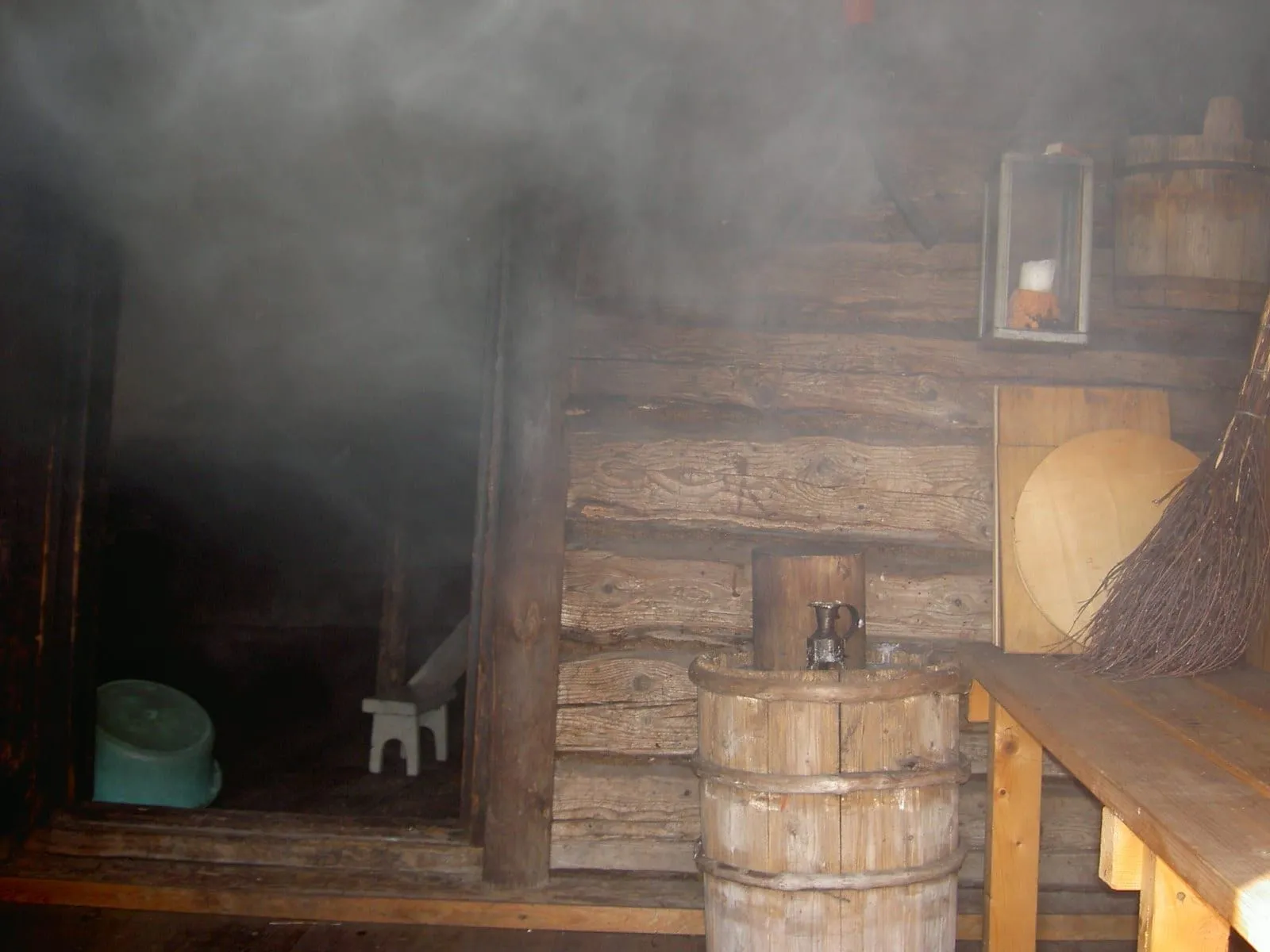
Smoke sauna in Uusikaupunki, Finland: löyly, the steam off the stones, is part of the “dry” sauna. Photograph: Math (Brendel Matyas), CC BY-SA 2.5, via Wikimedia Commons.

“Dry” should therefore not be read as “no water on the stones.” A sauna can have steam and still be a sauna. Some heaters also allow more humid bathing, as Harvia explains in its guidance on temperature and water.
The mistake is using the presence of steam alone to decide what to call the bath.
A hammam is not the same as a steam room
Another common shortcut is to call every “wet sauna” a hammam. The hammam has its own tradition. In Turkish bathing, the experience may include resting on heated marble, washing, exfoliation and a foam massage, as described by GoTürkiye, the country’s official tourism portal.
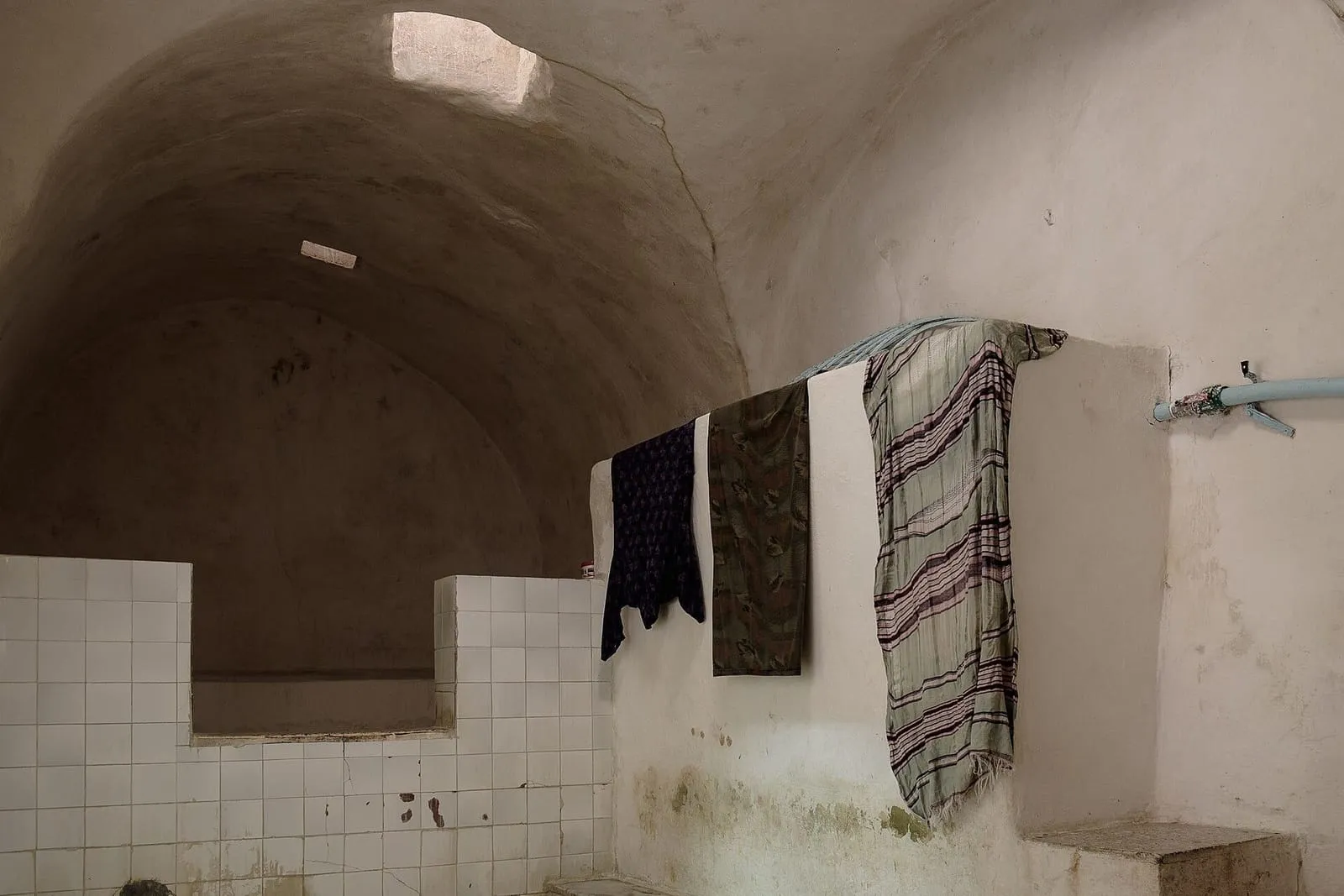
The caldarium of the Zeitouni hammam in Tunis: steam, hot stone, washing and scrubbing in one room. Photograph: Aymen FANTAR, CC BY-SA 4.0, via Wikimedia Commons.

If a venue only offers a room supplied by a steam generator, the clearest name is steam room. To advertise a hammam, the description needs to explain which bathing experience and ritual are available.
What to ask before booking
Instead of stopping at “dry or wet?”, ask what the experience involves: is there a heater with stones, and is water used? Is the room supplied with steam? Does the visit include washing and exfoliation, or just access to a hot room?
Those answers tell you more than a sign saying “sauna” and let you choose the bath you want without confusing equipment with traditions.
To compare systems, read our guide to sauna types. To understand how these baths fit into a venue’s wider offering, explore the differences between a bathhouse and other bathing spaces.